
10 Best Language Learning Tools for 2026 (That Actually Help You Speak the Language)
If you’re on the hunt for the best language learning tools, chances are you don’t just want to memorize 400 vocabulary words, you want to actually speak the language. Whether you’re planning a slow trip through Spain, moving to Italy, or just trying not to stumble while ordering a meal at a trattoria on your vacation, this list is for you.
I’ve been learning Spanish for years (shoutout to Emmanuel, my Preply tutor!) and recently started practicing Italian while living in Italy. And let me tell you, being surrounded by the language is helpful, but it’s not magic.
I still need structure, dedicated study time, and tools that keep me focused when my brain would rather zone out.
The tools in this post aren’t just fluff. I’ve used every single one of them (some for years), and they each serve a specific purpose, especially if your goal is to actually speak the language and not just swipe through a few lessons while waiting for your coffee.
Let’s get into it!
1. Preply: Best for Personalized Speaking Practice

If you’re serious about actually speaking Spanish, Italian, or almost any other language, Preply is the move. It’s a platform where you can book one-on-one lessons with native speakers.
I’ve used Preply for YEARS, mostly for Spanish, but lately I’ve been leaning on it to improve my Italian, too.
What I love the most about it is that you can try out a few tutors with trial lessons until you find someone who fits your style. I’ve had sessions with tutors from Argentina, Mexico, Spain, and now Italy, and every single one has helped me gain confidence in conversation.
You’re not just repeating phrases. You’re actually talking, listening, asking questions, and making real progress with someone who lives in the language you’re learning.
For me, I started with three lessons on Preply each week. It helped me stay accountable, knowing my tutor was expecting me to practice on my own outside of class. And I didn’t want to disappoint my tutor! The best way to stay motivated.
If you’re curious, check out my full review of Preply (and my tutor’s opinions about Preply).
Best for:
- Long-term travelers, expats, and remote workers
- Anyone prepping for a trip who wants to sound like they belong there
- Learners who want structure but hate classroom vibes
- Learners on a budget, since classes start as low as $5
2. Lingopie: Best for Learning Through TV and Movies

If you’ve ever justified binge-watching as “language learning,” Lingopie is your new best friend. It’s basically Netflix for language learners, but way smarter.
You’re watching real TV shows and movies in your target language, but with tools that actually help you learn while you watch. You can:
- Click on any word for instant translation
- Save vocab to review later
- Use dual subtitles (English + target language at the same time)
- Adjust the playback speed (so helpful when you’re a beginner and want to slow it down)
Bonus: you can even connect it to your Netflix account, so you can rewatch your faves with language-learning power-ups. The listening comprehension gains are real. This is why I think Lingopie is one of the absolute best language learning tools.
Best for:
- Visual learners
- People who don’t like traditional studying
- Anyone who wants to sound natural and understand slang, idioms, certain dialects (like Argentinian Spanish) and real speech patterns
3. Babbel: Best for Daily Grammar Practice

If grammar makes you totally snooze, I get it!
But, if you want to make progress, you have to do some grammar practice. There’s a lot to be said about learning by listening, but I think it’s important to lay the groundwork with some grammar, too.
Babbel makes it way more enjoyable.
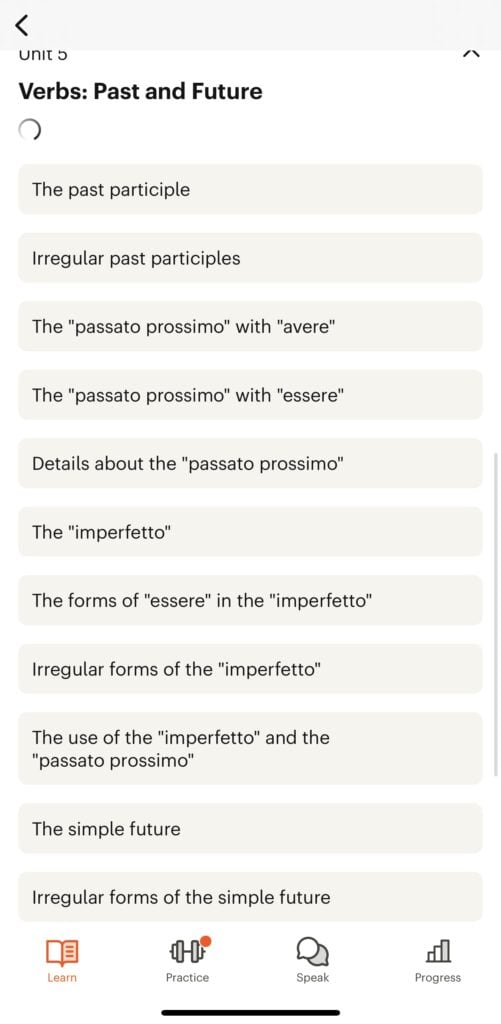
I’ve used Babbel for both Spanish and Italian, and I’ve found the 15-minute daily lessons super helpful for reinforcing my one-on-one lessons I take on Preply.
You’re not just memorizing, you’re learning how to use the language in real situations.
Compared to free apps like Duolingo, Babbel actually teaches you something useful. Real-life phrases, dialogue practice, and built-in grammar tips that help you stop mixing up tenses.
I also really like that you can select which lesson you want to study. Apps like Duolingo force you into following a predetermined path, which can get annoying if you want to skip one you already understand.
And Babbel is just way, way better than apps like MakesYouFluent (see my full, brutally honest review of MakesYouFluent).
Best for:
- Grammar avoiders who need structure
- Travelers who want to understand menus and make small talk
- People willing to invest in quality learning (it’s worth it)
👉 Read more: Check out my Babbel Spanish review and my Babbel Italian review.
4. Duolingo: Best for Casual Gamified Learning

Ah, Duolingo! It’s truly the “gateway drug” of language learning because pretty much everybody starts their language-learning journey here. If you’ve ever gotten a passive-aggressive notification from an owl at 10 p.m., you know the deal.
Duolingo is free, easy to use, and also kind of addictive. It’s great for building a daily habit, especially if you’re just starting out or trying to learn a new alphabet or basic phrases.
But what do I really think? If your goal is to actually speak the language, it’s not gonna get you there.
That said, it’s fine if you’re on a tight budget and just want some basics before your next trip. Think of it as your warm-up, not your workout.
Best for:
- Beginners
- People who love streaks and leaderboards
- Days when your brain is too tired for grammar drills
👉 Read more: I break it down in my post on Duolingo vs. Babbel, which one’s better depends on your goals.
5. Memrise: Best for Building Vocabulary with Native Audio


Memrise is so much fun. It’s all about real-life vocabulary, delivered by real humans. The coolest part of using Memrise is the short video clips of native speakers saying common phrases in Spanish, Italian, and other languages.
There aren’t any robotic voiceovers. You get real previews of real locals saying the words/phrases. It’s awesome, and a very fun way to learn Italian. Memrise is easily one of the best language learning apps for speaking because you can also speak the words aloud as you practice.
I still remember the day I purchased a lifetime access to Memrise, and I have no regrets. When I learned what “boh” meant in Italian and watched multiple video clips of Italians saying “boh” on the app, I was sold. IYKYK.
It’s like having a local talk to you, over and over again, until you finally get it. The spaced repetition system helps the vocab stick, and the bite-sized lessons make it easy to squeeze in a few rounds on your lunch break or while procrastinating something important.
If you’re someone who learns best by mimicking and repeating what you hear, Memrise is a solid pick.
Best for:
- Visual + auditory learners
- Building vocabulary for real-world situations
- People who want to hear how native speakers actually talk (and not just textbook dialogue)
6. Mondly: Best for Speech Recognition Practice
Mondly feels a little like the techie cousin in the language app family. It’s got voice recognition, chatbot conversations, and even some AR features if you’re into that sort of thing. Basically, it wants you to speak the language out loud, which is what we’re all here for, right?
While it’s not as conversation-heavy as having a one-on-one tutor, it’s a great tool for practicing pronunciation and getting comfortable hearing yourself say things. It’s especially beginner-friendly, so if you’re just starting Spanish or Italian and feeling overwhelmed, Mondly can ease you in.
Best for:
- Beginners who want to practice speaking but aren’t ready for live tutoring
- Tech lovers who want a more interactive app
- People who need a low-pressure way to get used to pronunciation
7. Rosetta Stone: Best for Immersive, No-English Learning
Rosetta Stone is basically the OG of language learning apps. It’s been around forever, and while it’s not as trendy as Duolingo or as personalized as Preply, it still does one thing really well: full immersion.
That means no English. Just pictures, context clues, and straight-up language exposure. It’s slow and steady, but that’s kind of the point. If you’re the type who wants to start thinking in the language, Rosetta Stone gets you there, eventually.
It’s not my favorite anymore these days because I think the UX could be updated. But it can be a good option if you’re committed and want that deep dive without distractions.
Best for:
- Visual learners
- People who want to train their brain to stop translating
- Learners who don’t mind a slower pace
8. YouTube: Best Free Resource

YouTube is a goldmine for language learners, if you don’t mind doing a little digging. You can find everything from native speaker interviews to grammar breakdowns to Spanish telenovelas and Italian cooking shows. And yes, it all counts as study time.
The downside? It’s not structured. You have to make sure to keep watching, not just once, but as a habit. But when paired with something like Quizlet (for vocab review) or Lingopie (for dual subtitles), it becomes a powerful and totally free way to improve your listening skills and hear real speech.
A few of my favorite YouTube channels for learning Italian:
Best for:
- Self-motivated learners who want authentic content
- People learning slang, accents, and cultural context
- Budget-conscious travelers
9. LanguaTalk: Best for 1-on-1 Conversations with Professional Teachers

LanguaTalk is like the quieter cousin of Preply, same idea, slightly smaller scale. You can book live, one-on-one lessons with native speakers in your target language (Spanish, Italian, and more). The focus is very much on speaking practice.
If you’re looking to get conversation practice without a big platform vibe, LanguaTalk might feel a bit more personal. I also think it has high-quality, certified tutors that frequently have more teaching experience, but that often comes at a higher price point. So, it’s not good if you’re on a budget.
I tried LanguaTalk for a few months, and my tutor, Andrea, was incredible. His lessons were always so fun and engaging, and he tailored each lesson to things most relevant in my life that I was interested in learning (i.e. travel vocabulary, finding an apartment, etc.).
Best for:
- People who want real conversation
- Learners not on a budget
- Anyone craving structure and accountability with a human touch
10. Quizlet: Best for Custom Vocab Review


Quizlet isn’t a full-on language learning app, but it’s an awesome sidekick. Think of it as your personalized flashcard trainer. You can build vocab decks based on whatever you’re learning in Preply lessons, Lingopie shows, or even words you picked up while eavesdropping in a café (no judgment).
It uses spaced repetition to help you actually remember stuff, and many decks include audio so you can practice pronunciation too. It’s great for reviewing on the go or cementing the random words you keep forgetting (why is “spoon” always the one that slips??).
I use Quizlet while I’m on the bus or the metro, aimlessly biding my time and looking to get a little vocab practice in.
Best for:
- Organizing and reviewing vocabulary
- Supplementing speaking or listening apps
- Learners who love checking things off
How to Make These Tools Actually Work for You


I’ll be completely honest with you… it’s easy to download a bunch of apps.
But these language learning tools don’t work unless you do. Whether you’re living in the U.S. or sipping an espresso in Florence, your progress depends on consistency, not location. Trust me, I’ve learned this lesson firsthand!
Here’s what I’ve learned:
- Set a schedule — even if it’s just 3 times a week. Ideally, daily practice is best, but also give yourself some grace.
- Mix it up — combine a speaking tool (like Preply), a grammar helper (like Babbel), and something for listening (Lingopie or YouTube).
- Track what’s working — Are you remembering new vocab? Are you actually speaking more? If not, switch it up!
Even while living in Italy, I’ve found I still need focused time to study Italian. Being surrounded by the language helps, but it doesn’t magically teach you when you’re busy ordering coffee or translating your mail.
You need structure, feedback, and something that holds you accountable, which is why these tools exist in the first place.
For a while, learning Spanish/Italian/French/etc. will become your life. You’ll obsess over it. And that’s a good thing.
Why Speaking Practice Matters More Than Just Vocabulary

It’s easy to fall into the trap of thinking you’re “learning a language” just because you’ve memorized 200 food items and can say “the cat is gray.”
But the real test? Trying to order food, making small talk, or asking for directions.
Speaking is where everything clicks. It forces you to:
- Recall words quickly
- Build sentences in real time
- Get over the fear of sounding like an idiot (which happens to all of us)
When I first started Spanish, I could recognize a ton of words. But speaking was a whole different game.
And now, living in Italy, I still catch myself freezing mid-sentence like, wait, what’s the word for “fork” again?
That’s why practicing conversation is so important. It’s the only way to get comfortable with the messiness of real-life communication.

It’s a bit embarrassing. It’s totally normal to feel frustrated and stupid sometimes. The hardest part is having the confidence to look silly and make mistakes. That’s the biggest challenge – overcoming your own timidness and just being okay with making a million errors. It’s impossible to learn a language without making mistakes.
Apps that make you speak — or give you the confidence to speak — are the ones that make all the difference. Whether it’s a tutor on Preply or a show on Lingopie, the goal is to get you speaking.
Final Thoughts: Which App Is Best for You?
So, which one should you choose? Honestly, it depends on your goals and your attention span. Personally, I think signing up for one-on-one tutoring at least 3 times per week is a good place to start.
Here’s the TL;DR:
- Want to actually speak like a human? → Go with Preply
- Want to sneak in study time while watching TV? → Try Lingopie
- Need help making sense of grammar? → Use Babbel
- Just getting started or want a freebie? → Duolingo and Memrise can help
- Like flashcards and vocab drills? → Add Quizlet to the mix
You don’t need all of them. Pick one or two based on how you learn best — and stick with it! If you’re anything like me, it’s easy to get distracted by shiny new apps (or Instagram scrolling), but consistent practice beats app-hopping every time.
Whichever tool you pick, make it part of your weekly routine, and don’t be afraid to actually start speaking — even if it’s just to your dog at first or singing along to Beauty and the Beast in Italian (yes, that’s something I’ve actually done). That’s how real learning happens.
Congratulations on beginning (or continuing) your language learning journey. Send me an email at jen @ jenontherun .com to let me know how it’s going!
Read More About Language Learning:
- How to Create a Language Learning Plan That Actually Works for You
- Learning Spanish for Travel: Phrases That Actually Help You Meet People
- 10 Best Language Learning Tools (That Actually Help You Speak the Language)
- I Tried Lingopie for 2 Weeks & Now I’m Spilling the Tea — A Lingopie Review
- I Took 50 Classes on Lingoda: My VERY Honest Lingoda Review
- Preply Review: 3 Years of Spanish Classes—The Honest Truth from a Student & Tutor
- Babbel Italian Review: 30 Days In, Would I Still Recommend It?
- I Practiced Spanish with Babbel Every Day for Two Weeks — An Honest Review
- Babbel vs. Duolingo: Which Language Learning App is Best for Travelers?
- Lingoda vs Preply: My Honest Take After Learning Spanish on Both
- MakesYouFluent Review: I Tried It for 2 Weeks—Here’s the Truth
Planning a trip right now? Here are a few top resources I use on every trip:
🏨 Booking.com for great deals on hotels.
🎟️ GetYourGuide for incredible tours around the world.
🌍 Faye for travel insurance with great customer support.
📞 eSIM for staying connected in the air, on a cruise ship, or exploring on foot.
🗣️ Babbel for brushing up on my language skills.
