
How to Ride the Cable Cars in San Francisco
Riding the cable cars in San Francisco is a must-do for any first-time visitor! As a longtime Californian, I’ll guide you through everything you need to know about the iconic cable cars, from routes to tips on avoiding long lines.
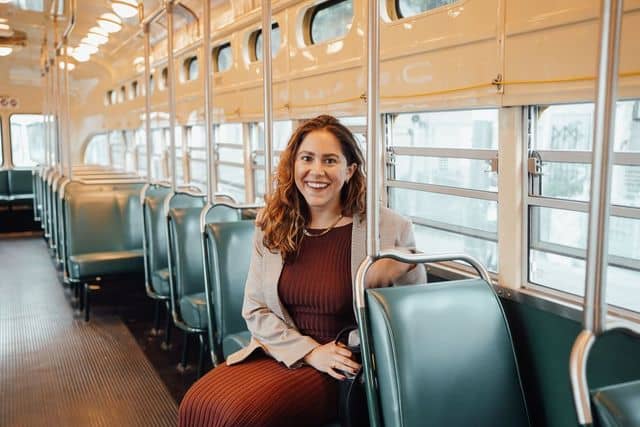
Having ridden these historic cars on almost every visit to SF over the past 15 years, I always recommend it for first-time visitors to San Francisco.
However, if you aren’t used to riding public transit, it might be a little bit confusing.
And even if you’re a transit pro, there are a few things you’ll want to know about SF’s cable car system in advance.
Let’s get riding!
How Many Cable Car Lines in San Francisco Are There?
San Francisco has three iconic cable car lines:
1. Powell/Mason Line
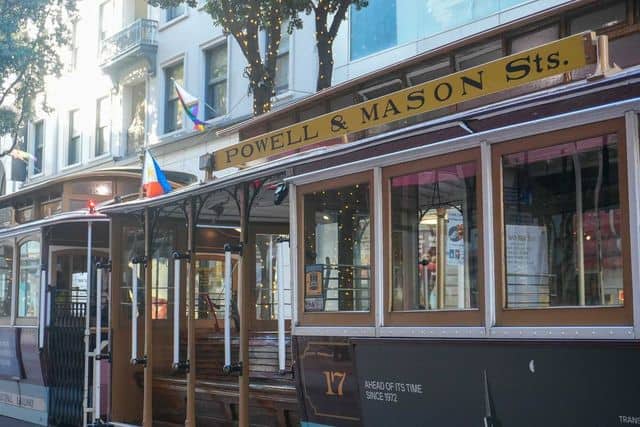
Perfect if you’re short on time. It’s faster than the Hyde line, especially if you start at the Taylor end, near Pier 39.
What’s the route that the Powell/Mason Line takes?
The start and end of the Powell/Mason line:
- South Terminus: Powell Street turnaround at Market Street.
- North Terminus: Taylor and Bay, a few blocks south of Pier 39.
2. Powell/Hyde Line
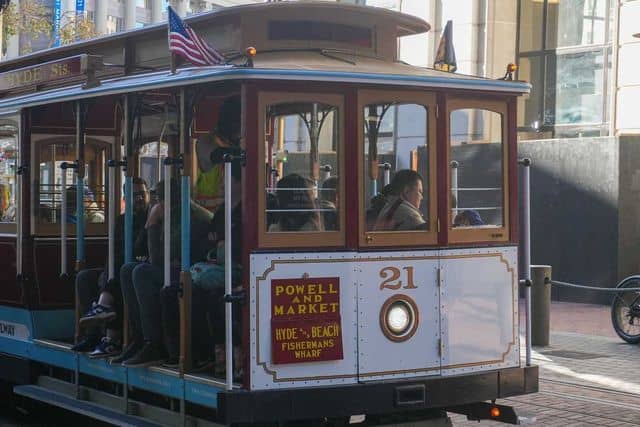
The most scenic route. Traveling north, you can catch views of the Golden Gate Bridge on clear days, Lombard Street, and Alcatraz.
What’s the route that the Powell/Hyde Line takes?
The start and end of the Powell/Hyde line:
- South Terminus: Powell Street turnaround at Market Street.
- North Terminus: Beach and Hyde near Ghirardelli Square.
3. California Line

Ideal for avoiding crowds. This lesser-known line offers a low-key experience and great selfie opportunities, but it runs less frequently, so check the timetables.
What’s the route that the California Line takes?
The start and end of the Powell/Hyde line:
- East Terminus: California and Drumm near the Ferry Building.
- West Terminus: California and Van Ness near Lafayette Park.
Each ride takes about 20 minutes, not including wait times. And be sure to account for wait times!
Which Cable Car Route is the Best?

Well, that depends on what you’re looking for and how much time you have.
On my recent visit, I took the Powell/Hyde line from the South Terminus. It was super close to where I was staying, the InterContinental SF.
So, consider where you are staying in San Francisco, and how far you are located from the cable car start and end points.
This line offers really nice views along the way, including a stop at Lombard Street, and it finished near Fisherman’s Wharf.
You can watch my experience riding San Francisco’s cable car right here:

We were super lucky to catch views of Alcatraz and the Golden Gate Bridge that day!
If you want the most scenic experience, definitely take the Powell/Hyde Line. If you’re short on time, go with the California Line.
But really, if you have the time, I suggest riding all three lines! It’s a great way to experience the different parts of the city.
Where to Board the Cable Cars in San Francisco
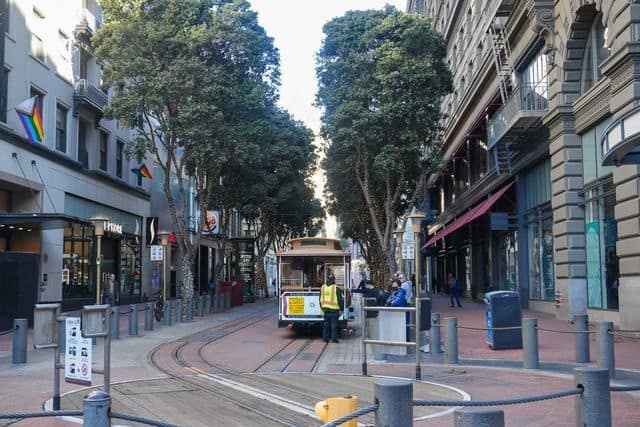
You can board at the cable car turntables (the beginning or end of each route) or look for the brown-and-white cable car signposts along the way.
Starting at the end gives you the full ride, but boarding at a stop along the way can help you avoid long lines (more on that, below).
Just make sure to prepay on your app before you hop on!
It’s pretty cool to watch the cable car technicians turn the car at the end or start of the line, so you might want to check it out and then walk up to the next stop to board.
Prefer to ride the cable cars on a guided tour instead of DIY-ing it? Check out this tour by GetYourGuide (my preferred tour provider) to get a taste of real San Francisco culture and history.
Tips for Avoiding Long Lines
Riding the cable cars in San Francisco is a very fun and very popular thing to do. As you might imagine, they can get crowded, and it can take a while to board them.
A few tips to avoid waiting in a long line:
Walk up one block: They don’t fill up the cars at the turnaround points, so if you walk to the next cable car stop, you can usually get right on. If not on the first car, then almost certainly on the next one.
Timing: Depending on the season, time of day, or who has just gotten off, you may or may not get one of the coveted outside seats. However, there’s a good chance of snagging a pole-hanging spot.
I recommend going before you eat breakfast. Seriously, go first thing in the morning – at 9 am – for the shortest wait.
Otherwise, you might end up waiting to ride for upwards of an hour. Yikes! 😬
How Much Does Riding the Cable Cars Cost?

I’ll be honest, it’s not cheap for a fairly short ride. Riding the cable car in San Francisco costs $8 for a one-way ride, without transfers.
If you want to ride multiple times or try a different line, it’s a good idea to get the 1-Day Visitor Passport using MuniMobile. This includes unlimited rides on Muni, Muni Metro, streetcars, and, of course, the cable cars!
The 1-day pass costs $13, so if you plan on riding transit a few more times that day, you end up saving money.
There are also 3 and 7-day passes available if you’re planning a longer trip in the city.
Payment Options
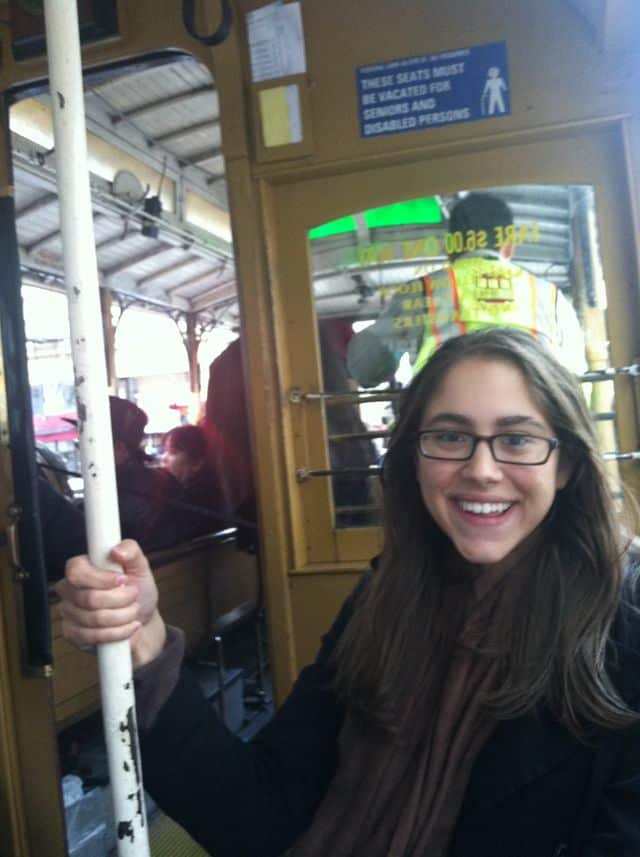
You can pay for your cable car ride a few different ways:
- Muni Mobile App: Download and fund the Muni Mobile app, then have the conductor scan your app. This is how you get the $13 day pass mentioned above.
- Clipper Card: This card also works on BART and Caltrain. You can purchase a plastic Clipper card from kiosk machines or download the app and add the card to your phone’s wallet.
- Paper Ticket: You can buy a paper ticket at the kiosks at either end of the Powell/Hyde and Powell/Mason lines.
- Cash: On the California line, you can pay the conductor in cash, but not on the other lines.
Tips for Making the Most of Your Cable Car Experience
Best Seats and Views
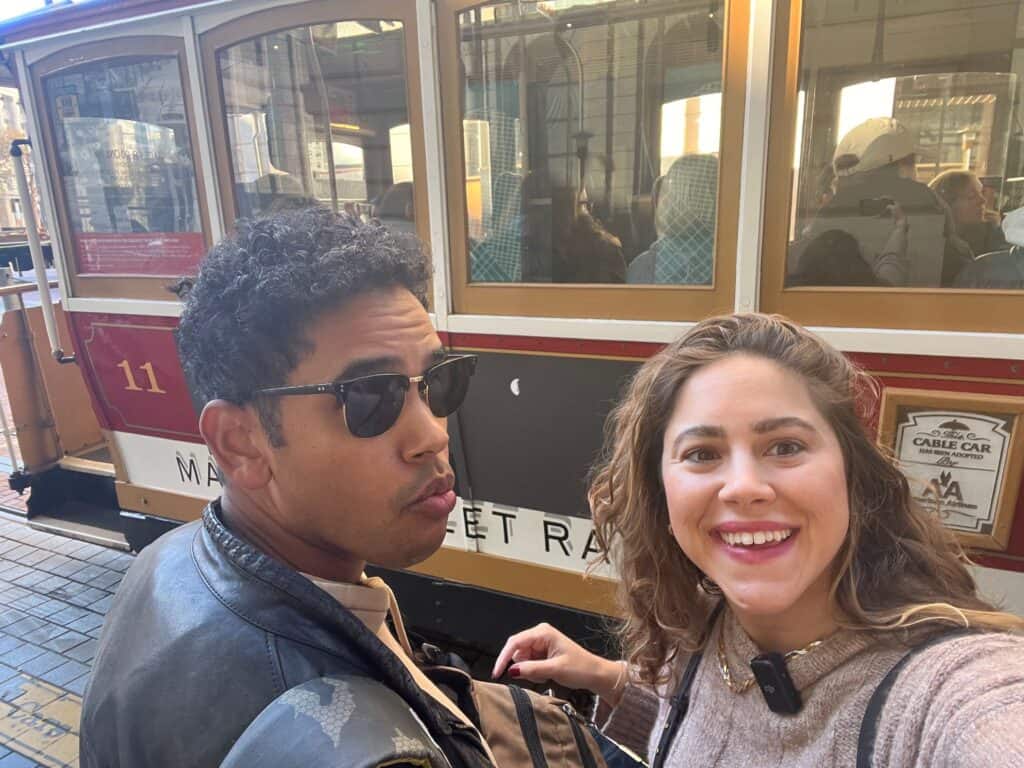
For the ultimate cable car experience, aim for the outside seats or standing up while hanging onto a pole. Kind of scary, kind of thrilling, and definitely a good view.
However, these spots tend to fill up quickly, so if you’re one of the last to board, you might end up with an inside seat.
Don’t worry, though – there’s still plenty to see!
Safety Tips on SF’s Cable Cars
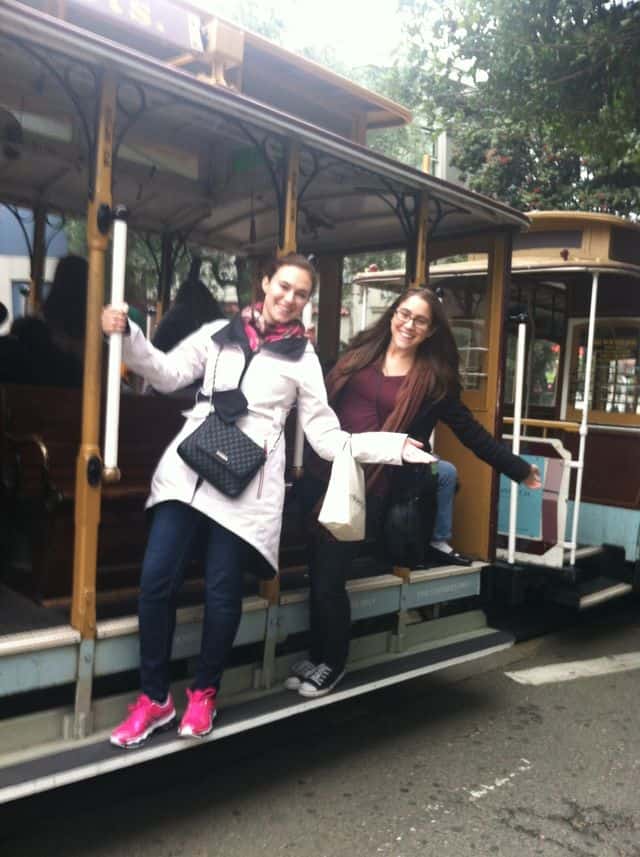
San Francisco’s busy streets and steep hills make for an exciting cable car ride. But if you are hanging onto one of the poles, you will want to be very careful.
Here are some safety tips to keep in mind:
- Hold on tight: Whether you’re sitting or standing, always hold on to the rails, especially if you’re in a pole-hanging spot.
- Don’t lean out: If you’re standing and holding onto the poles, resist the urge to lean outward when the cable car is moving.
- Getting off the cable car: Wait until the car comes to a complete stop before getting off, and be sure to watch out for cars!
- Be careful with what you wear! Don’t let your scarf snag on a tree that passes by, and keep all your belongings tucked away in a backpack.
Fun Facts
The California line features a larger car with an inside compartment in the middle and outside seating on both ends.
A Brief History of San Francisco’s Cable Car System
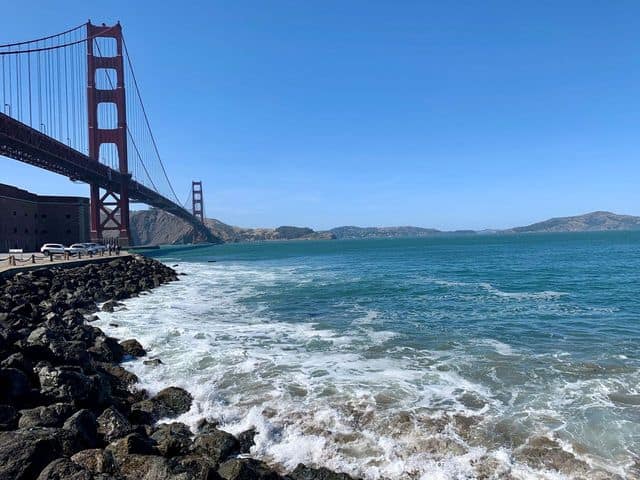
The cable cars San Francisco is famous for were invented by Andrew Smith Hallidie in 1873.
Inspired by early mining systems and a harrowing experience watching horses struggle on wet cobblestones, Hallidie developed a steam engine-powered, cable-driven rail system.
The first successful test run was on August 2, 1873, on Clay Street, marking the beginning of a transit revolution in the city. Pretty cool, right?
Historical Milestones
San Francisco’s cable cars have witnessed huge events in history:
- Expansion: By the late 1800s, 53 miles of tracks connected the city from the Ferry Building to the Presidio, Golden Gate Park, and the Castro.
- The Great Earthquake (1906): The earthquake and fires damaged much of the cable car infrastructure. Despite the rise of electric streetcars, cable cars survived due to their ability to navigate the city’s steep hills.
- Post-War Challenges: In 1947, Mayor Roger Lapham proposed replacing cable cars with buses. Friedel Klussmann’s Citizens’ Committee to Save the Cable Cars led a successful campaign to preserve them, resulting in Measure 10’s passage.
Preservation Efforts
San Francisco’s cable cars are a cherished symbol of the city. The locals love the cars, and visitors do, too.
So, over the years, there have been many efforts to preserve this piece of the city’s heritage.
Going back as far as 1947, a man named Friedel Klussmann formed the Citizens’ Committee to Save the Cable Cars.
The committee worked to pass Measure 10, which ensured the preservation of the Powell Street cable car lines.
Because of the many efforts by the committee, San Francisco’s cable cars are now one of only two National Historic Streetcar Landmarks in operation.
With these protections in place, the cable cars should be able to continue operating for years to come! Fascinating, right?
Suggestions for the Ultimate Cable Car Enthusiast
Head to the Cable Car Museum
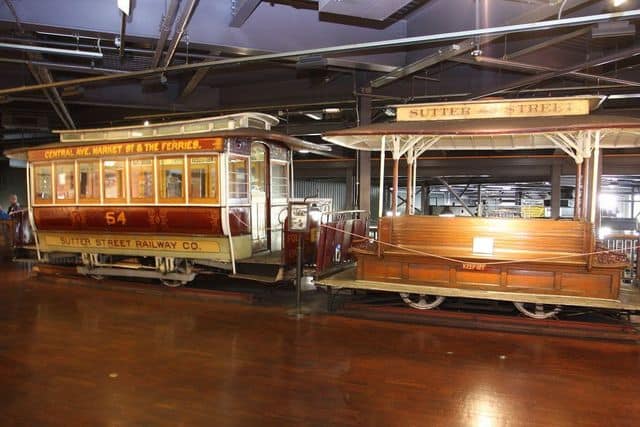
Located at Washington and Mason Streets, the Cable Car Museum offers a fascinating look at the history and mechanics of these iconic vehicles.
You’ll find historic cable cars, photographs, and detailed exhibits on how the cable car system operates.
Before you head to the museum, you could plan on grabbing breakfast at a cafe near the Cable Car Museum — a few good spots within walking distance are Cafe Isabella, The Morning Fix, and Toast Eatery.
Plus, you can see the giant wheels that pull the cables in action!
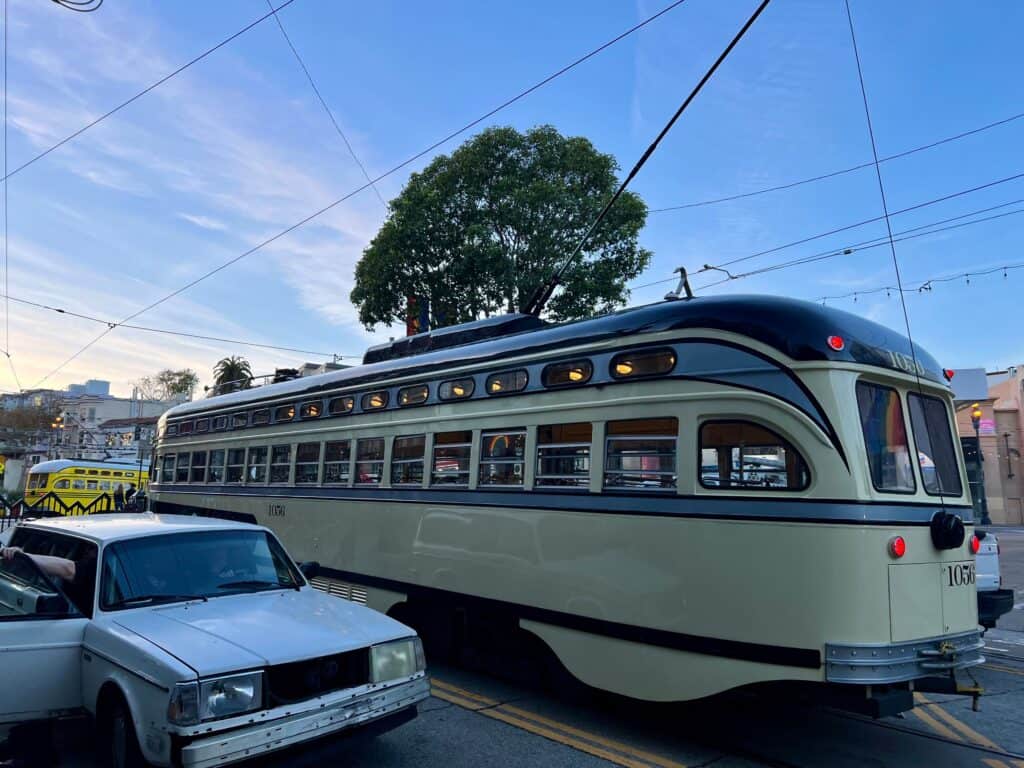
Ride the Market Street Railway

Expand your trolley experience by riding the Market Street Railway Muni line.
This line features beautifully refurbished trolley cars from around the world, including cities like Philadelphia, Dallas, St. Louis, Mexico City, Porto, Moscow, Milan, and Kobe.
It’s kind of like a rolling international museum! 😆
I had the chance to hop on one of these unique trolleys while exploring the Castro. The conductor was kind enough to let us on board and take a few photos. Check it out in my YouTube video!
The Market Street Railway charges regular Muni fees and runs from 17th/Castro in the Castro neighborhood, along Market Street, turning north onto the Embarcadero, and ending at Pier 39.
Wrapping Up Your Cable Car Adventure
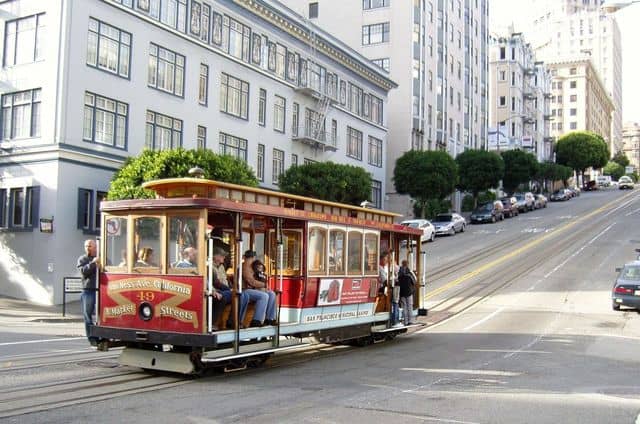
Riding the cable cars in San Francisco is an unforgettable experience! It’s a great combo of history, views, and even some thrill.
I hope this guide has covered everything you need to know to make the most of riding the cable car in San Francisco. If you have questions, leave a comment!
Remember to explore the Cable Car Museum, consider the Market Street Railway for an international trolley experience, and use my tips to avoid long lines and stay safe during your ride.
Ready to plan your trip to San Francisco? Check out my guide about the top hotels to stay at in San Francisco for my recommendations on where to rest your head after your wild cable car ride!
Read More About San Francisco:
- How to See the Best of San Francisco in One Day
- How to Ride the Cable Cars in San Francisco
- What to Wear in San Francisco: Practical & Stylish Outfit Ideas
- Best Places to Stay in San Francisco: Tips for First-Time Visitors (2024)
- Solo Date Ideas in San Francisco: Exploring the City’s Charm Alone!
- San Francisco or Los Angeles? Here’s How to Choose
- Hands Down, Where to Find the Best Breakfast in San Francisco
Planning a trip right now? Here are a few top resources I use on every trip:
🏨 Booking.com for great deals on hotels.
🎟️ GetYourGuide for incredible tours around the world.
🌍 Faye for travel insurance with great customer support.
📞 eSIM for staying connected in the air, on a cruise ship, or exploring on foot.
🗣️ Babbel for brushing up on my language skills.
